
Making chemistry visible, one molecule at a time
Volume II of the “How Atoms Form Molecules” series
What determines where electrons spend their time?
Using hydrogen and helium as guideposts, this volume presents a geometric interpretation of atomic structure that aligns with quantum mechanics — while making its constraints visible.
Start here (recommended)
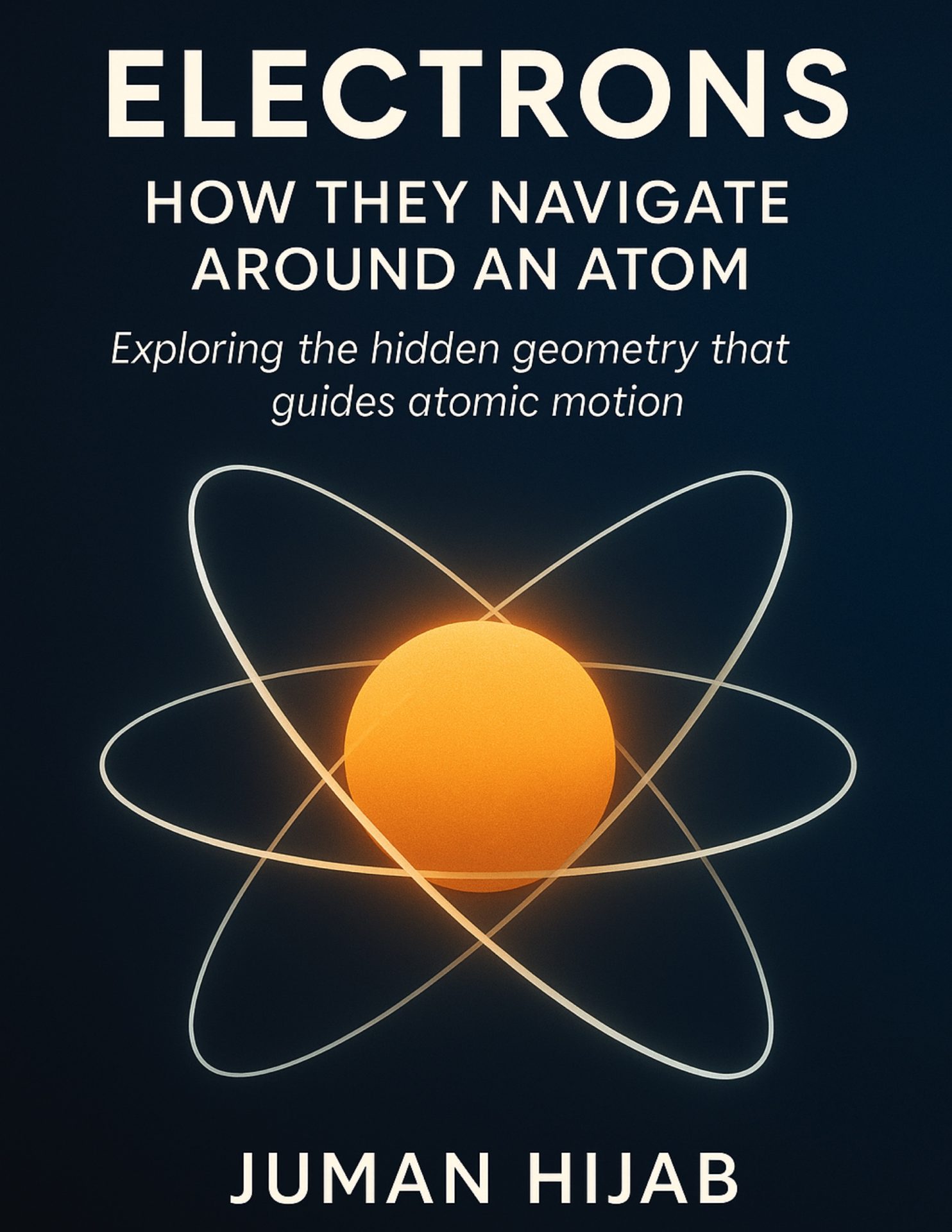
Volume I: Electrons — How They Navigate Around an Atom
A visual introduction to how electrons move around atoms
A short, visual guide to the energy levels that organize electrons inside atoms.
Most readers finish it in about an hour.
II. Hydrogen and Helium Atoms and Their Bonds
Start reading Volume II — see sneak peek
Choose your format
Choose Apple Books for the easiest ebook experience.
Choose PDF for the simplest download.
Choose EPUB for non-Apple ebook readers.
No EPUB reader? How to read an EPUB)
Free from Life’s Chemistry Press and Apple Books. Kindle edition: $0.99.
II. Hydrogen and Helium Atoms and Their Bonds
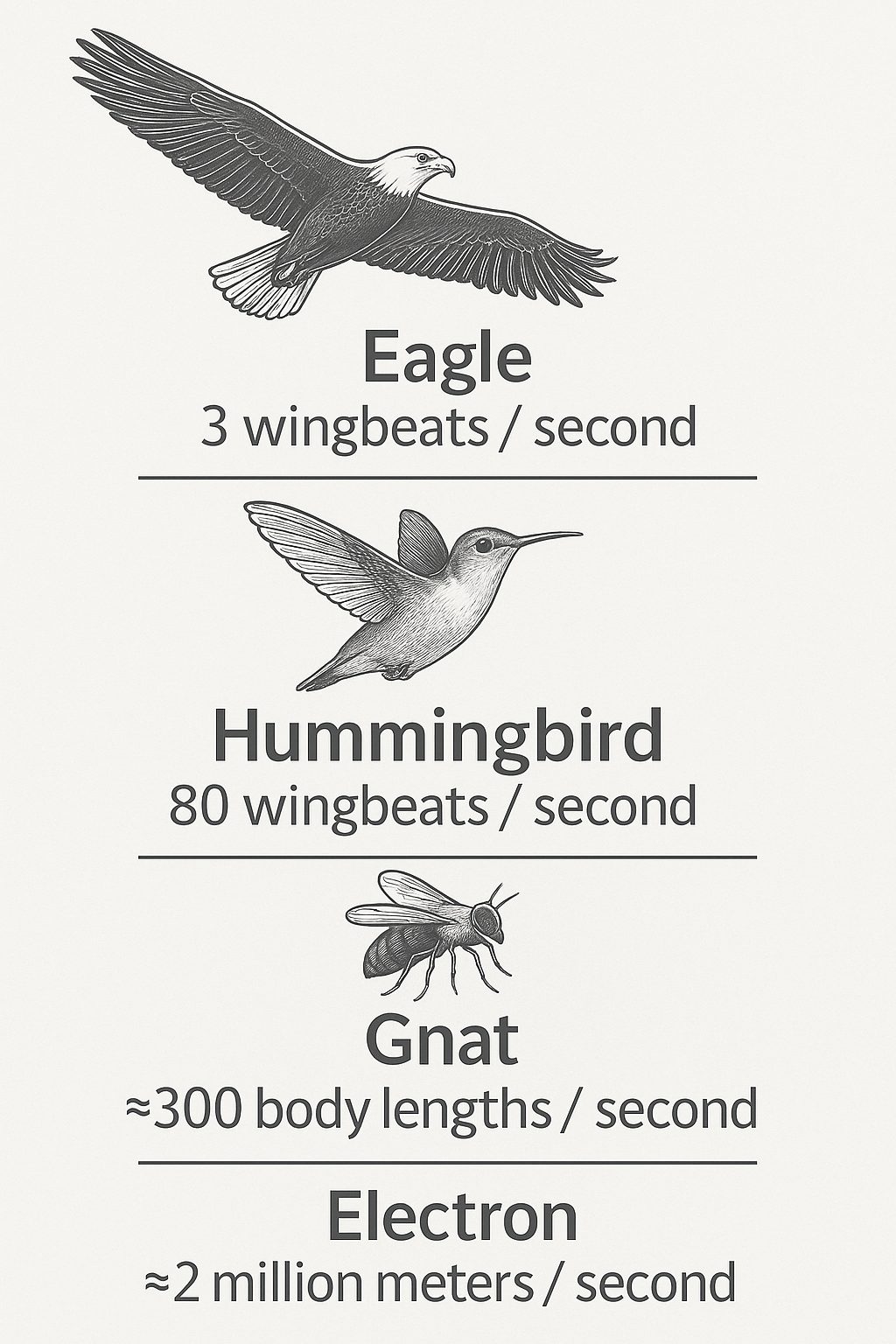
Electron "bench points": Electrons do not wander randomly. They move along defined geometric paths.
What You’ll Learn
Sneak Peek Inside
Volume II
Introduction
Key idea: There are 3 rules that electrons must abide by (Minimize Repulsion; maximize Symmetry; minimize Energy).
Key word: “Bench point”
* * *
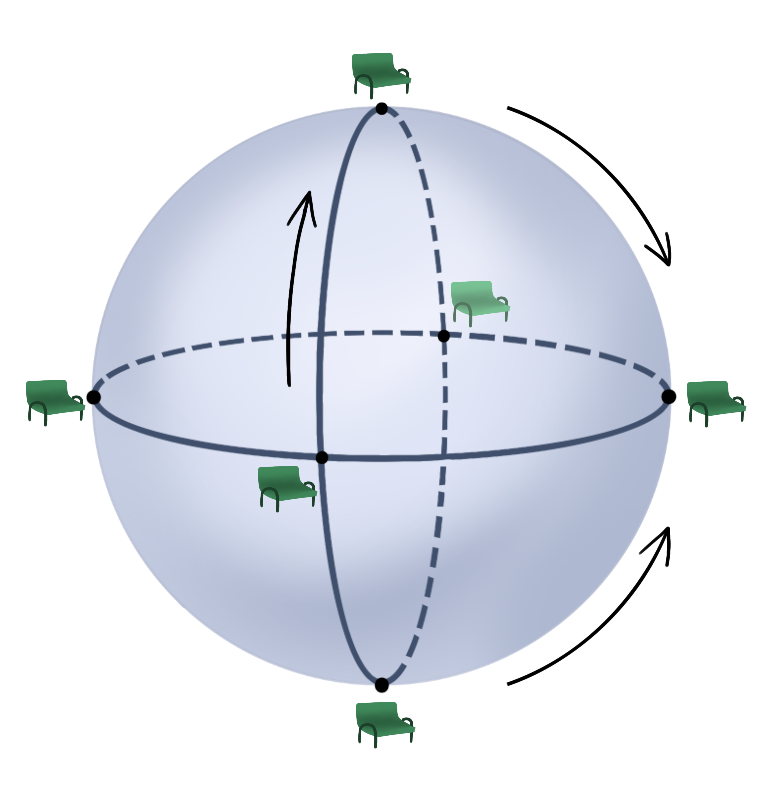
Electrons repeatedly return to positions that naturally minimize energy. These preferred locations are their “bench points”—like a traveler pausing briefly at a bench before resuming their journey.
In Volume I of How Atoms Form Molecules, we explored the forces—the “rules of the road”—that guide electrons as they travel around a nucleus:
- Repulsion: Electrons spread out because each carries a negative charge.
- Symmetry: Electrons arrange themselves in balanced, mirrored positions that keep the atom stable.
- Energy: Electrons always choose the lowest-energy state they can reach.
These ‘rules’ are not additional laws of physics, but a way of tracking how known forces restrict motion. The three rules create a quiet, constant tug-of-war inside every atom.
Electrons are pulled inward by the nucleus, pushed outward by other electrons, and guided at every moment by their instinct for symmetry and low energy. They behave like expert runners on a circular track—always adjusting distance and speed to stay in the cleanest, most efficient lane.
* * *
However, while it is important to know that electrons are never static—and moving at unimaginable speeds—they have preferred places that they go back to.
Electrons repeatedly return to positions that offer naturally low energy. These are their “bench points”, like a traveler pausing briefly at a bench before resuming their journey.
These “bench points” form the cleanest balance positions for electron motion. They are regions the electrons revisit repeatedly because they maximize symmetry and minimize energy.
This volume shows how electrons find those positions.
* * *
We will use the simplest atoms—hydrogen and helium—to watch these choices in action. Their electrons reveal the most basic “bench points” that all other atoms eventually build upon.
In this volume we explore those positions step by step, using simple metaphors and geometry to visualize where electrons go, why they go there, and how these “bench points” shape the visible world.
Chemistry begins when electrons start spending more time in some places than in others.
* * *