
Making chemistry visible, one molecule at a time
Volume III of the “How Atoms Form Molecules” series
III. The Geometry of Orbitals
How electrons sculpt the shapes of the s, p, d, and f orbitals
A visual guide to why orbitals have shapes.
See how spheres, cubes, and dodecahedra can make p-, d-, and f-orbitals easier to picture.
Free from Life’s Chemistry Press and Apple Books.
Useful as a visual supplement for introductory chemistry or physics.
Choose your format
Choose Apple Books for the easiest ebook experience.
Choose PDF for the simplest download.
Choose EPUB for non-Apple ebook readers.
No EPUB reader? How to read an EPUB)
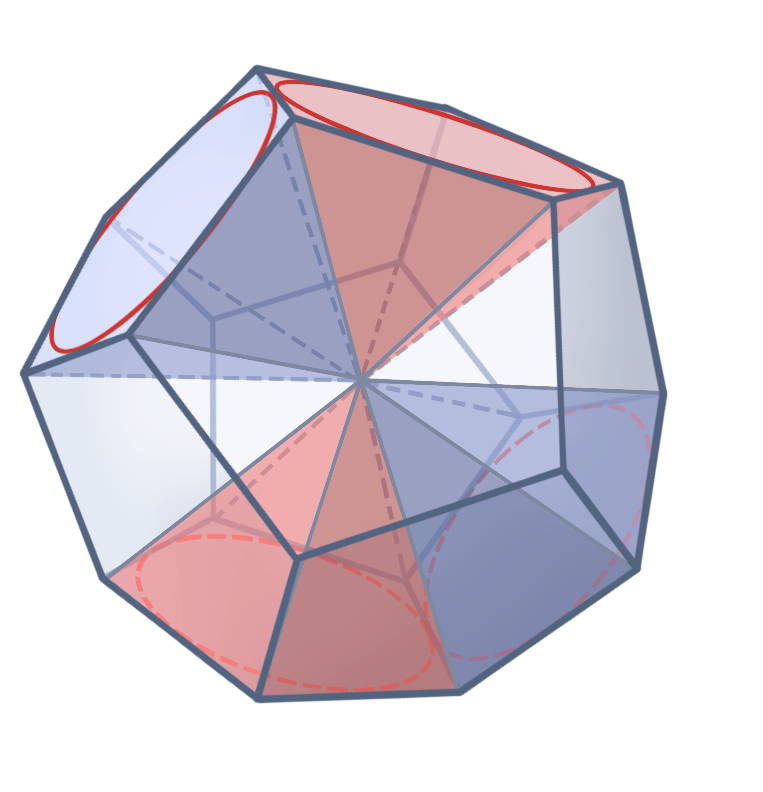
from Chapter 7: Dodecahedron with pentagonal pyramids
In this volume, we explore how electrons may shape these three-dimensional regions of probability.
These regions—these patterns—are the orbitals.
See "sneak peek" below.
p orbital geometry
What You’ll Learn
Quantum mechanics describes these patterns through equations and energy constraints.
Geometry helps make the same patterns visible as spatial structure.
In this volume, we show that both lead to the same patterns: the s, p, d, and f orbitals.
This volume prepares the ground for Volume IV, where Geometric rules are used to explain orbital filling rules in the Periodic table of Elements.
Sneak Peek Inside
Volume III
Volume III: The Geometry of Orbitals
How electrons sculpt the shapes of the s, p, d, and f orbitals
* * *
Prologue
Volume II introduced symmetry, constraints, and energy as guiding principles. Electrons were described as settling into symmetric arrangements that minimize energy, avoid overlap, and remain as close to the nucleus as possible.
Those arrangements emerged from geometry. But they were presented as a model.
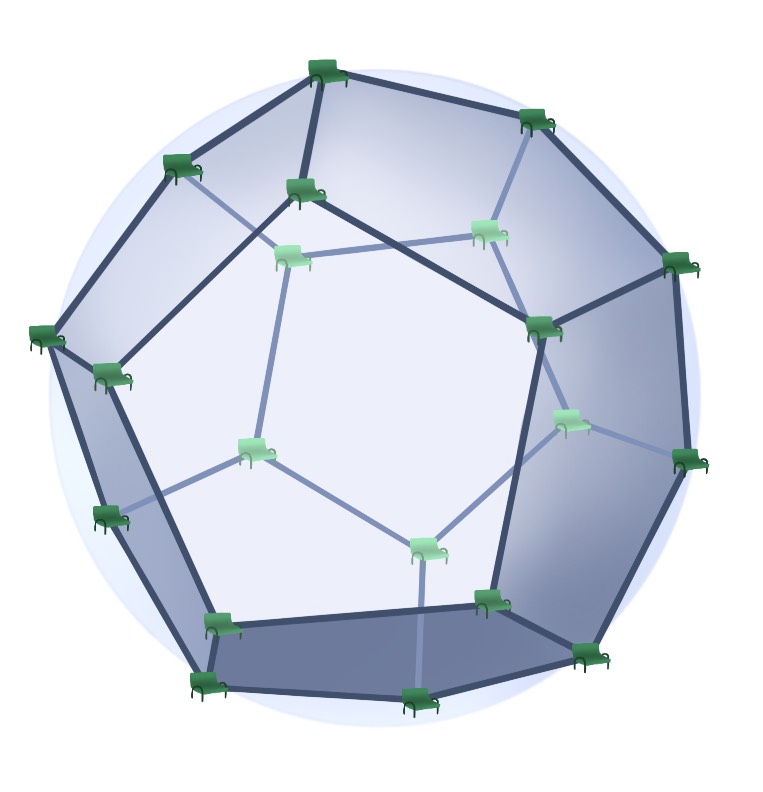
Figure P.1. Volume II used geometric “seating arrangements” to model electron positions. Volume III asks whether those geometric constraints align with quantum probability patterns.
* * *
This volume asks a deeper question:
Do those geometric constraints match the probability patterns of quantum mechanics?
* * *
If they do, even approximately, then the geometric and quantum descriptions align.
Geometry does not replace the Schrödinger equation. It reveals what the equation already contains:
- Dominant probability directions
- Nodal boundaries
- Symmetry constraints
* * *
In other words:
- Quantum mechanics gives the solutions
- Geometry makes their structure visible
- Chemistry depends on recognizing that structure
Physics → Geometry → Chemistry
That is the bridge this volume follows.
* * *
In this volume, we show how the familiar s-, p-, d-, and f-orbitals can be seen as structured probability regions shaped by symmetry, boundaries, and geometric scaffolds.
These regions — these patterns — are the orbitals.
* * *
Introduction
Key Idea: The symmetry of a sphere, together with the rules governing an electron, gives rise to structured patterns around the nucleus.
These patterns define where electrons are most likely to be.
Quantum mechanics (QM) calculates these patterns.
Geometry helps us see how these patterns are arranged in space.
Key word: Start here: the visual summary on the next page.
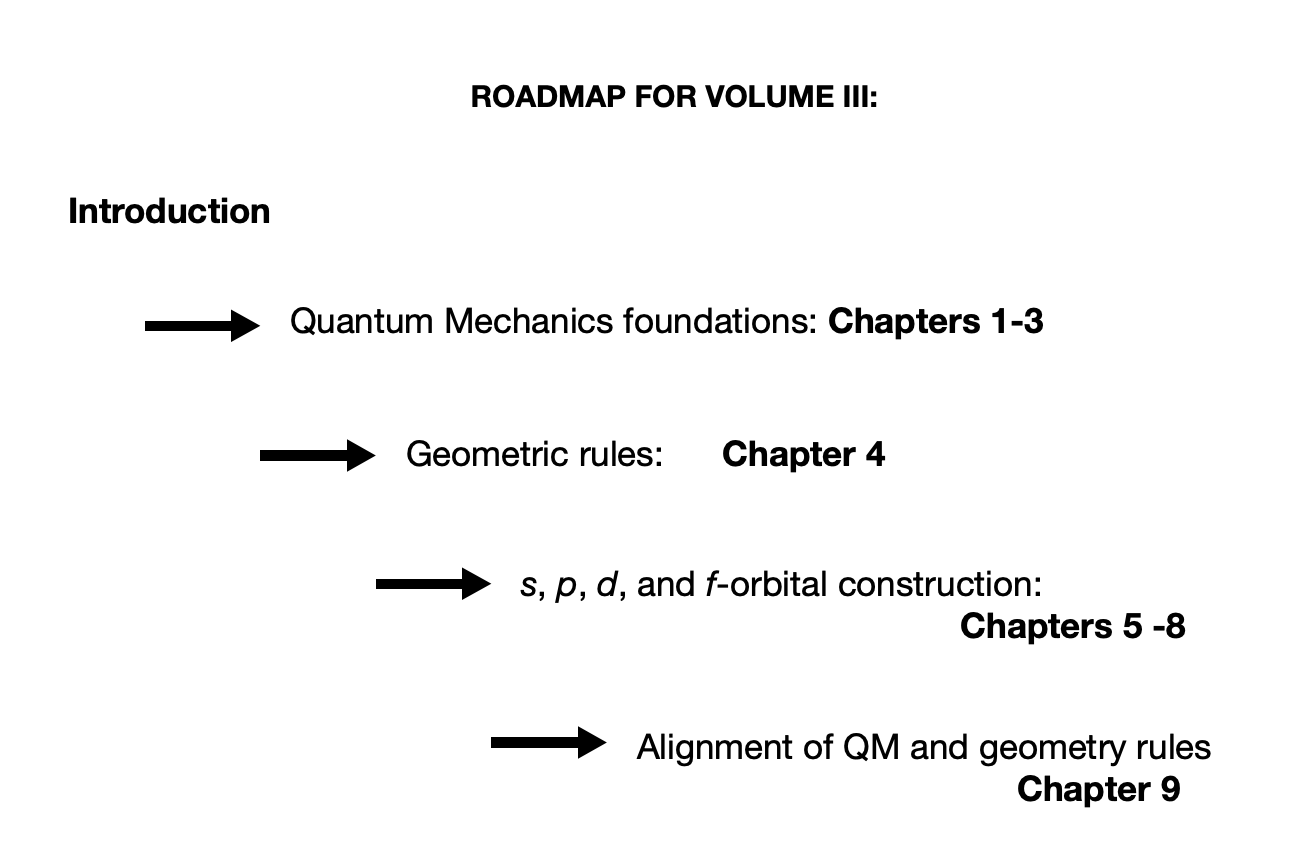
Figure I.1 Visual summary of the book’s central idea: quantum mechanics defines orbital patterns, while geometry reveals how those patterns are organized in space.
* * *
From physical rules to geometric structure
In Volume I and Volume II, we described several simple rules that electrons appear to follow: they minimize energy, maintain symmetry, avoid overlap, repel one another, and remain attracted to the nucleus.
Quantum mechanics expresses these same pressures as mathematical constraints. Geometry helps us see how those constraints appear in space.
This volume follows that bridge: from physical rules, to QM structure, to geometric orbital patterns.
* * *
What this volume will show
- Chapter 1 introduces the minimal QM needed to understand orbital patterns
- Chapter 2 defines the geometric framework that shapes those patterns.
- Chapters 3–6 construct the s-, p-, d-, and f-orbitals.
- Chapter 7 brings both views together.
At each step, the goal is clarity—not complexity.
* * *
Central claim
The central claim is simple: the familiar orbital shapes are not random. Their strongest regions often line up with the same directions highlighted by symmetric geometric scaffolds.
In other words:
Geometry does not replace quantum mechanics.
It gives us a way to see the structure inside it.
* * *